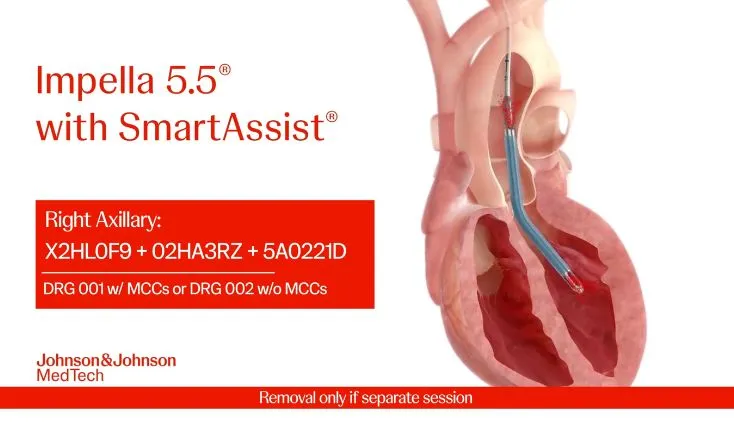
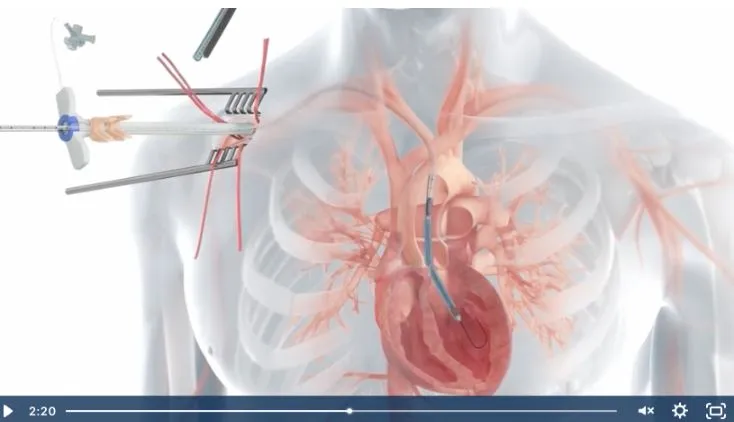
This video describes accurate coding for the Impella 5.5™ with SmartAssist™ reflecting the documented approach, conduit creation, device insertion, and cardiac assistance.
A webinar with Jeff Tyler, M.D. from Providence Health, discussing Protected PCI selection criteria, high‑risk revascularization strategy, and what CHIP‑BCIS3 teaches us about real‑world decision‑making.
A webinar with Mir Babar Basir, DO from Henry Ford Hospital, discussing Protected PCI selection criteria, high‑risk revascularization strategy, and what CHIP‑BCIS3 teaches us about real‑world decision‑making.
A webinar with Jason Wollmuth, M.D. from University of Virginia Health, discussing Protected PCI selection criteria, high‑risk revascularization strategy, and what CHIP‑BCIS3 teaches us about real‑world decision‑making.
A webinar with Rajan Patel, M.D. from University of Virginia Health, discussing Protected PCI selection criteria, high‑risk revascularization strategy, and what CHIP‑BCIS3 teaches us about real‑world decision‑making.
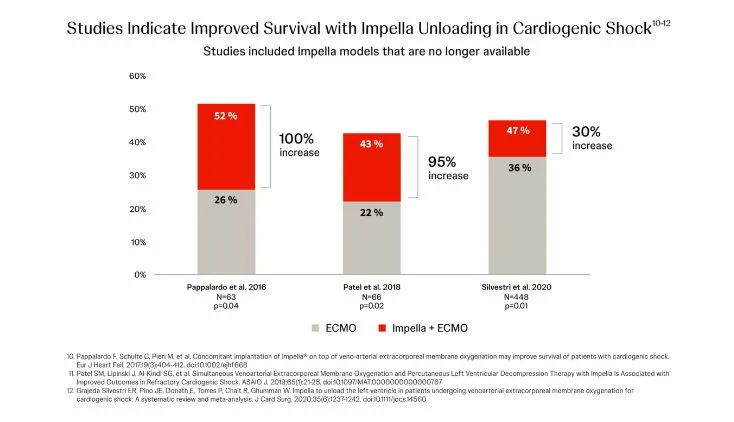
Studies have shown that combining Impella 5.5™ with SmartAssist™ with VA-ECMO in select patients with high-risk cardiogenic shock can improve survival as well as help optimize weaning strategies and heart recovery.
Jena Billig discusses concepts relevant to transporting patients supported with both left- and right-sided Impella devices (BiPella patients) and patients supported with ECMO and an Impella device.
Members of the Johnson & Johnson MedTech Science Office team discuss best practices for managing patients supported with an Impella RP FlexTM with SmartAssistTM.
NPS-1674
This information is intended for use by customers, patients, and healthcare professionals in [region] only. We recognize that the Internet is a global communications medium; however, laws, regulatory requirements, and product information for medical products can vary from country to country. The product information included here may not be appropriate for use outside [region], and the information from other sites you visit may not be appropriate for use in [region].
The Protected PCI community
is now on HeartRecovery.com
Providing education and training to help health care professionals
recover hearts, oxygenate the body and save lives.