
AMI Cardiogenic Shock
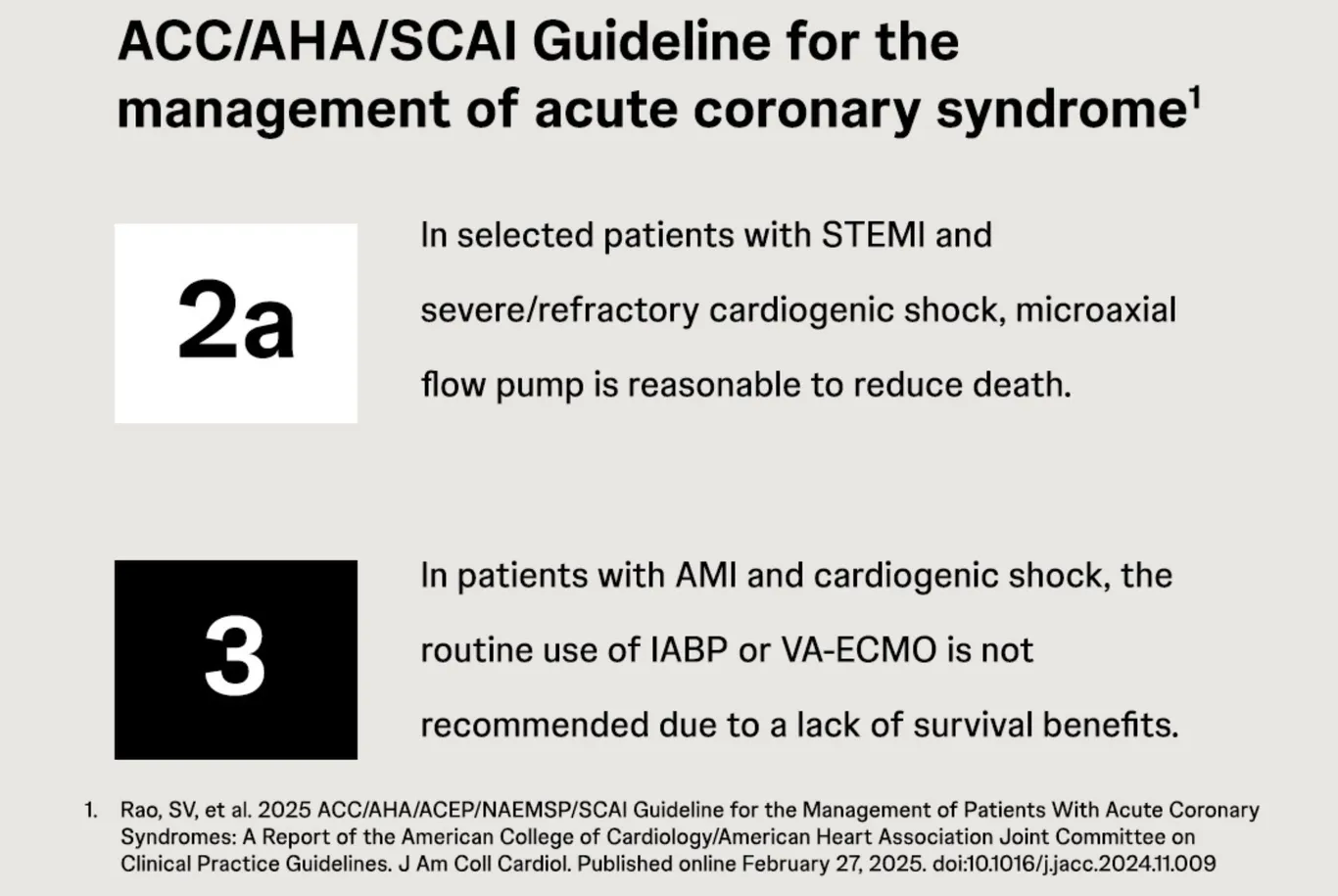

ACC/AHA Upgrades mAFP to Class 2a and Downgrades IABP and VA-ECMO to Class 3 in patients with STEMI and Cardiogenic shock
The new Acute Coronary Syndrome (ACS) guidelines downgrade intra-aortic balloon pump (IABP) and venoarterial extracorporeal membrane oxygenation (VA-ECMO) to Class 3 due to no shown benefit, while microaxial intravascular flow pumps (mAFP), Impella®, is now Class 2a in patients with STEMI and severe or refractory cardiogenic shock.

DanGer Shock RCT
Published in the New England Journal of Medicine, confirms routine use of ImpellaTM Improves Survival in Heart Attack with Shock1

Early Identification of Cardiogenic Shock Improves Outcomes
Timely treatment adhering to a best practice protocol that includes early use of mechanical circulatory support, hemodynamic monitoring and aggressive reduction of inotropes and pressors, can help patients achieve myocardial recovery.5

Best Practice Protocols1-5
For decades cardiogenic shock mortality rates remained at approximately 50%. Starting in 2019, contemporary studies showed that survival can be improved by using best practice protocols.
- Identify CS early and Impella pre-PCI < 90 minutes
- Aggressive down-titration of inotropes
- Identify RV dysfuntion early and support
- Identify inadequate LV support and escalate
- Systematic use of RHC to guide therapy
Final Results from the National Cardiogenic Shock Initiative (NCSI) Study Demonstrate the Benefit of Early Cardiac Unloading with ImpellaTM
The NCSI study demonstrates a 71% survival to discharge when best practices are used, including placement of an Impella heart pump prior to revascularization.5
Online Calculators
Heparin-Free Purge Solution
Sodium bicarbonate is the preferred purge solution when heparin is of concern due to HIT or bleeding related to heparin.
Patient Management Resources from the Education Library
NPS-1306