Education Library

Resources for Health Care Professionals

Filter Results

Condition

Audience

Topic

Type

What is the PROTECT Series?

This FAQ discusses the PROTECT series of FDA clinical studies, which includes PROTECT I, the PROTECT II RCT and PROTECT III, is the largest-ever study of hemodynamically supported high-risk PCI patients.

2024 Q1 Critical Care Transport Update Webinar

Jena Billig discusses heparin-free purge solution and the features of the second-generation Impella 5.5® with SmartAssist® in this critical care transport webinar.

2024 Q2 Critical Care Transport Update Webinar

Jena Billig discusses right ventricular (RV) failure and right-sided Impella devices in this critical care transport webinar.

Impella ECP Pivotal Study: First Results

Amir Kaki, M.D., describes the first results from the Impella ECP Pivotal Study.

TCT 2024: Shockwave Innovations

Nick West, M.D., CMO at Shockwave, discusses Shockwave innovations presented at TCT 2024.

Educational Grant Frequently Asked Questions

The following is provided for informational purposes to organizations that are considering applying for an Abiomed Educational Grant. 

Successful Mechanical Circulatory Support (MCS) in Cardiogenic Shock Patients - A Glimpse into the Future

This article examines current evidence for the use of mechanical circulatory support (MCS) in cardiogenic shock and discusses how the scientific community can advance research in this area.

DanGer Shock Results at ACC 2024 from Jacob Møller, M.D.

Jacob Møller, M.D., the principal investigator of the DanGer Shock trial, discusses the study results he presented at ACC 2024.

Recognizing Patients as Candidates for Mechanical Circulatory Support Along the Spectrum of Cardiogenic Shock

This paper discusses the latest guidance for identifying patients with cardiogenic shock (CS) who are candidates for mechanical circulatory support (MCS).

Optimal Bail-Out and Complication Management Strategies in Protected High-Risk Percutaneous Coronary Intervention With the Impella Heart Pump

In this article the authors describe techniques for Impella heart pump removal with or without pre-closure and discuss how to prevent and manage complications associated with large-bore femoral access.

Handling High-Risk Patients in the Catheterization Laboratory

This article describes how the interventional cardiology team handles high-risk patients in the cath lab, from procedural preparation and planning through procedural monitoring, as well as weaning strategies and access site management.

Case Presentation by Alan Gass, M.D., FACC

Alan Gass, M.D., FACC from Westchester Medical Center presents a case of a 48-year-old male without prior medical history who presented to a local hospital with several hours of chest pain.

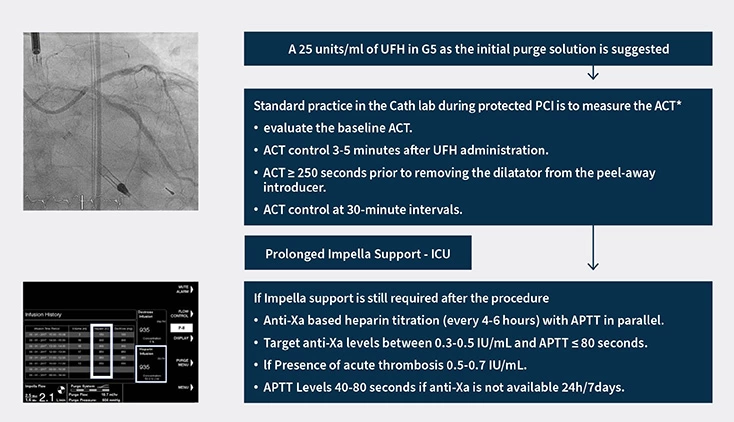
What Is Known in Pre-, Peri- and Post-Procedural Anticoagulation in Micro-Axial Flow Pump Protected Percutaneous Coronary Intervention?

“The precarious balance between bleeding and thrombosis in patients with p-LVAD support is often the primary reason that patients’ outcomes are jeopardized,” write the authors of this article, which discusses anticoagulation strategies and anticoagulant management in the setting of Protected PCI.

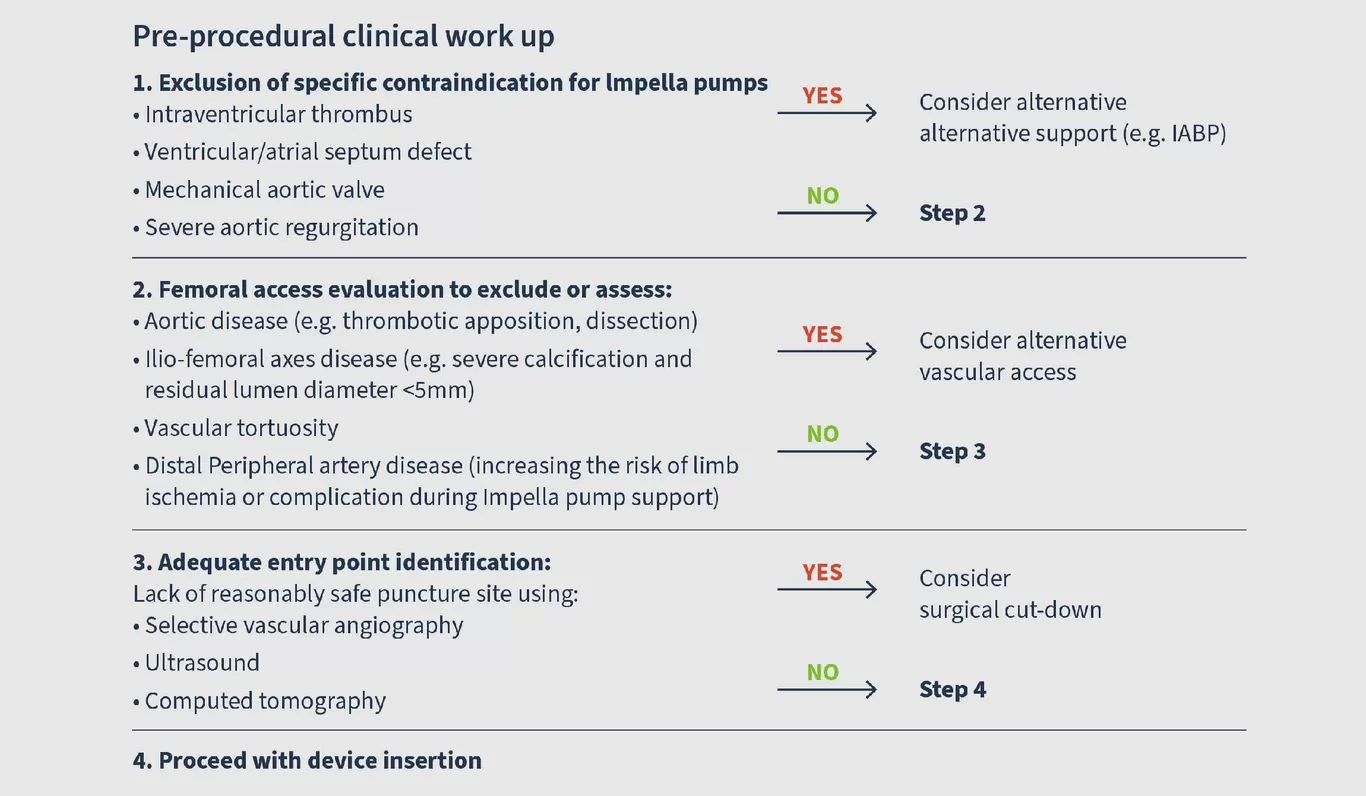
Standardized Pre-Procedural Clinical Workup for Protected Percutaneous Coronary Intervention

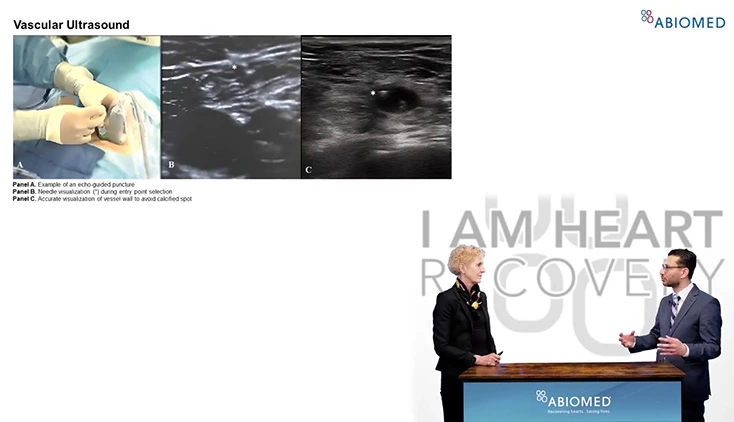
This article describes pre-procedural preparation, with a particular focus on imaging techniques for screening and guiding vascular access in patients undergoing Protected PCI.

Impella RP Flex with SmartAssist® Tip-to-Toe

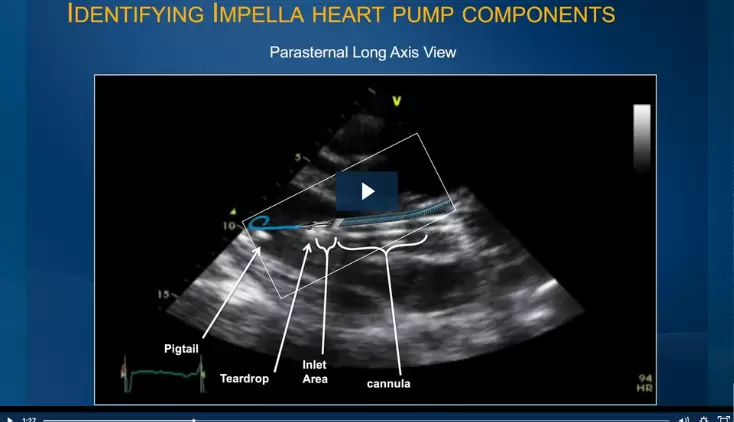
Jason Richard provides a tip-to-toe review of the key features of the Impella RP Flex with SmartAssist®.

NPS-1674

This information is intended for use by customers, patients, and healthcare professionals in [region] only. We recognize that the Internet is a global communications medium; however, laws, regulatory requirements, and product information for medical products can vary from country to country. The product information included here may not be appropriate for use outside [region], and the information from other sites you visit may not be appropriate for use in [region].