Unloading

What is the Difference Between “Venting” and “Unloading”?

1. What is ventricular unloading?

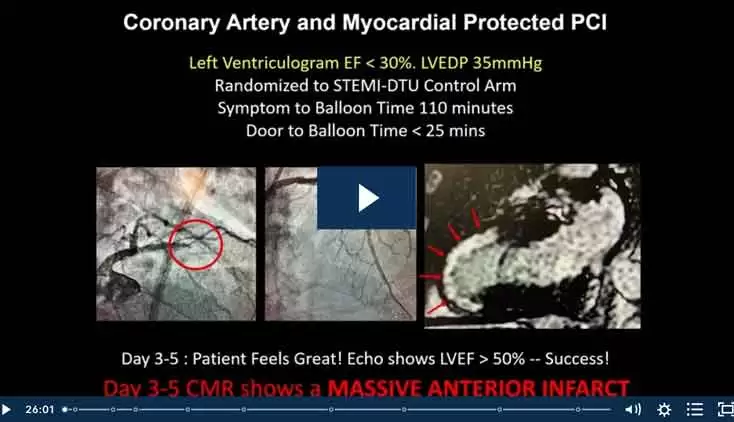
Ventricular unloading refers to a reduction in left ventricular pressure and volume. By reducing pressure and volume, wall stress is reduced, and therefore myocardial oxygen demand is reduced, and in the setting of an impaired heart, there is better supply/demand matching.

In a review published by Uriel et al., ventricular unloading is described as the reduction of mechanical power expenditure of the ventricle to minimize myocardial oxygen consumption and reduce hemodynamic forces that lead to ventricular modeling.1 Myocardial oxygen consumption can be reduced by decreasing heart rate, contractility, and/or total mechanical work. The total mechanical work of the heart per beat is referred to as the pressure-volume area (PVA). Lowering ventricular systolic and diastolic volumes and pressures minimizes PVA.1

Microaxial intravascular flow pumps (mAFP), such as the Impella platform, aspirate blood directly from the left ventricle and eject blood into the aorta, resulting in reduction of left ventricular pressure/volume, reducing myocardial work and myocardial oxygen demand. In this way, they provide effective ventricular unloading.2,3

Learn more about the science of active unloading.


2. Is venting the same as unloading in the case of ECMO?

No. Venting is not the same as unloading.

Venting uses passive strategies to treat ventricular distension including techniques such as atrial septostomy. These passive techniques differ significantly from active volume and pressure unloading. Active volume and pressure unloading are unique to transvalvular axial flow pumps such as Impella and reduce the pressure-volume area (PVA), oxygen consumption, and ventricular work. Additionally, unloading reduces wall tension, increases coronary flow,2,4 and provides a platform for transitional support for patients on other MCS platforms such as ECMO.


3. What are the benefits of adding Impella to ECMO?

Impella utilized with ECMO has demonstrated higher survival rates and native heart recovery than ECMO alone.5,6 In a large multicenter, propensity-matched study, patients with cardiogenic shock treated with the combination of Impella and veno-arterial extracorporeal membrane oxygenation (VA-ECMO) demonstrated higher survival rates and native heart recovery than patients treated with VA-ECMO alone.5,6

While VA-ECMO improves oxygenation and maintains critical organ perfusion, it also increases ventricular afterload, myocardial oxygen demand, and decreases myocardial perfusion.5 Addition of ventricular unloading with Impella mitigates these effects of ECMO with reduction of left ventricular pressure and volume and myocardial oxygen demand.2,3


4. Can IABP provide unloading when used with ECMO?

Intra-aortic balloon pump (IABP) does not actively unload left ventricular volume and has not demonstrated clinical benefit when used with ECMO.7

While the use of IABP with ECMO is widespread, a pooled experience of 1,517 patients reported that concomitant use of IABP is not associated with improved survival. The authors concluded, “The absence of an observable survival benefit may be due to insufficient augmentation of cardiac output with IABP and inadequate LV decompression, and the use of devices with more cardiac output support such as percutaneous microaxial flow pumps may lead to a measurable survival benefit.”7


5. Are there specific recommendations for cardiac surgeons?

For the first time, EACTS, STS, and AATS jointly recommend early initiation of temporary mechanical circulatory support (tMCS) as a Class I intervention for patients with cardiogenic shock.8

Timely support can help prevent multi-organ failure, reduce mortality, and optimize outcomes in high-risk surgical patients.

Microaxial flow pumps like Impella are a recommended option by EACTS, STS, and AATS for use both alone and in combination with VA-ECLS for advanced left ventricular unloading and biventricular support without the need for an oxygenator in patients with cardiogenic shock.8

Among the key recommendations: Class IIa: Initiate LV unloading within 2 hours of VA-ECLS for improved outcomes.

Learn more about EACTS/STS/AATS Guidelines: Temporary Mechanical Circulatory Support in Cardiac Surgery.


6. Are there specific recommendations for MCS in patients with ACS and cardiogenic shock?

The new Acute Coronary Syndrome (ACS) guidelines downgrade IABP and VA-ECMO to Class III due to no shown benefit, while microaxial intravascular flow pumps (mAFP), Impella, is now Class IIa in patients with STEMI and severe or refractory cardiogenic shock.9

The AATS Expert consensus statement elevates Impella recommendations in patients with AMICS to a Class I. Based off the results from the DanGer Shock RCT, 91% of AATS clinical experts agree that it is a Class I recommendation for patients with AMICS to receive an Impella to facilitate left ventricular unloading prior to revascularization.10

The guideline upgrade for Impella is based on evidence from the DanGer Shock RCT, published in the New England Journal of Medicine and the first AMICS trial to achieve its primary survival endpoint.11,12

Learn more about recommendations for MCS in patients with ACS and cardiogenic shock.

View more resources

References

  1. Uriel, N., Sayer, G., Annamalai, S., Kapur, N. K., & Burkhoff, D. (2018). Mechanical Unloading in Heart Failure. Journal of the American College of Cardiology, 72(5), 569–580. https://doi.org/10.1016/j.jacc.2018.05.038
  2. Weber, D.M., et al. (2009). Principles of Impella Cardiac Support. Cardiac Inter Today Supp, Aug/Sep, 3-16.
  3. Burkhoff, D., Sayer, G., Doshi, D., & Uriel, N. (2015). Hemodynamics of Mechanical Circulatory Support. Journal of the American College of Cardiology, 66(23), 2663–2674. https://doi.org/10.1016/j.jacc.2015.10.017
  4. Meyns, B., Stolinski, J., Leunens, V., Verbeken, E., & Flameng, W. (2003). Left ventricular support by catheter-mounted axial flow pump reduces infarct size. Journal of the American College of Cardiology, 41(7), 1087–1095. https://doi.org/10.1016/s0735-1097(03)00084-6
  5. Pappalardo, F., Schulte, C., Pieri, M., Schrage, B., Contri, R., Soeffker, G., Greco, T., Lembo, R., Müllerleile, K., Colombo, A., Sydow, K., De Bonis, M., Wagner, F., Reichenspurner, H., Blankenberg, S., Zangrillo, A., & Westermann, D. (2017). Concomitant implantation of Impella® on top of veno-arterial extracorporeal membrane oxygenation may improve survival of patients with cardiogenic shock. European journal of heart failure, 19(3), 404–412. https://doi.org/10.1002/ejhf.668
  6. Patel, S. M., Lipinski, J., Al-Kindi, S. G., Patel, T., Saric, P., Li, J., Nadeem, F., Ladas, T., Alaiti, A., Phillips, A., Medalion, B., Deo, S., Elgudin, Y., Costa, M. A., Osman, M. N., Attizzani, G. F., Oliveira, G. H., Sareyyupoglu, B., & Bezerra, H. G. (2019). Simultaneous Venoarterial Extracorporeal Membrane Oxygenation and Percutaneous Left Ventricular Decompression Therapy with Impella Is Associated with Improved Outcomes in Refractory Cardiogenic Shock. ASAIO journal (American Society for Artificial Internal Organs : 1992), 65(1), 21–28. https://doi.org/10.1097/MAT.0000000000000767
  7. Cheng, R., Hachamovitch, R., Makkar, R., Ramzy, D., Moriguchi, J. D., Arabia, F. A., Esmailian, F., & Azarbal, B. (2015). Lack of Survival Benefit Found With Use of Intraaortic Balloon Pump in Extracorporeal Membrane Oxygenation: A Pooled Experience of 1517 Patients. The Journal of invasive cardiology, 27(10), 453–458.
  8. Potapov, E. V., Whitman, G., John, R., Lanmüller, P., Tucanova, Z., Arora, R. C., Atluri, P., de Waal, E. E. C., Faerber, G., Loforte, A., Lorusso, R., Morales, D. L. S., Netuka, I., Pagani, F. D., Gollmann-Tepeköylü, C., Shaffer, A., Silvestry, S. C., Stein, L. H., Takayama, H., Tsui, S. S. L., … EACTS/STS/AATS Scientific Document Group (2025). EACTS/STS/AATS Guidelines on temporary mechanical circulatory support in adult cardiac surgery. The Annals of thoracic surgery, S0003-4975(25)00949-X. Advance online publication. https://doi.org/10.1016/j.athoracsur.2025.09.005
  9. Rao, S. V., O’Donoghue, M. L., Ruel, M., Rab, T., Tamis-Holland, J. E., Alexander, J. H., Baber, U., Baker, H., Cohen, M. G., Cruz-Ruiz, M., Davis, L. L., de Lemos, J. A., DeWald, T. A., Elgendy, I. Y., Feldman, D. N., Goyal, A., Isiadinso, I., Menon, V., Morrow, D. A., & Mukherjee, D. (2025). 2025 ACC/AHA/ACEP/NAEMSP/SCAI guideline for the management of patients with acute coronary syndromes: A report of the american college of cardiology/american heart association joint committee on clinical practice guidelines. Circulation, 151(13), e771–e862. https://doi.org/10.1161/cir.0000000000001309
  10. Kaczorowski, D, et al. (2025). 2025 American Association for Thoracic Surgery (AATS) Expert Consensus Document: Surgical Management of acute myocardial infarction and associated complications. J Thoracic and CV Surgery. 10.1016/j.jtcvs.2025.04.013
  11. Møller J, et al. (2024). Microaxial Flow Pump or Standard Care in Infarct-Related CS. N Engl J Med. DOI: 10.1056/NEJMoa2312572
  12. Rao, S. V., O'Donoghue, M. L., Ruel, M., Rab, T., Tamis-Holland, J. E., Alexander, J. H., Baber, U., Baker, H., Cohen, M. G., Cruz-Ruiz, M., Davis, L. L., de Lemos, J. A., DeWald, T. A., Elgendy, I. Y., Feldman, D. N., Goyal, A., Isiadinso, I., Menon, V., Morrow, D. A., Mukherjee, D., … Peer Review Committee Members (2025). 2025 ACC/AHA/ACEP/NAEMSP/SCAI Guideline for the Management of Patients With Acute Coronary Syndromes: A Report of the American College of Cardiology/American Heart Association Joint Committee on Clinical Practice Guidelines. Journal of the American College of Cardiology, 85(22), 2135–2237. https://doi.org/10.1016/j.jacc.2024.11.009

NPS-690

This information is intended for use by customers, patients, and healthcare professionals in [region] only. We recognize that the Internet is a global communications medium; however, laws, regulatory requirements, and product information for medical products can vary from country to country. The product information included here may not be appropriate for use outside [region], and the information from other sites you visit may not be appropriate for use in [region].